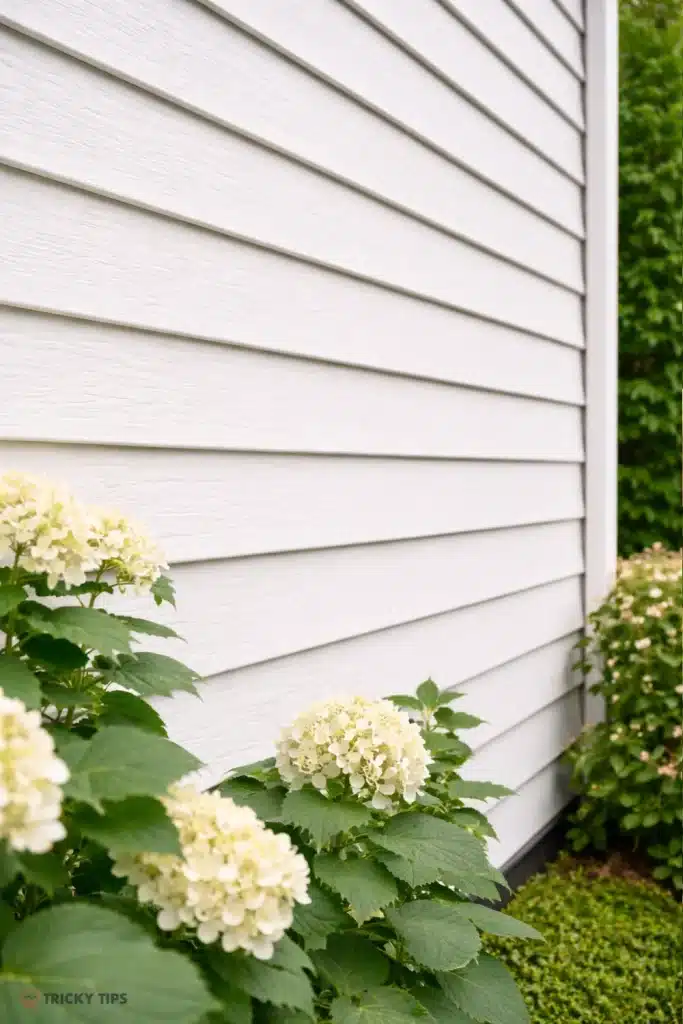
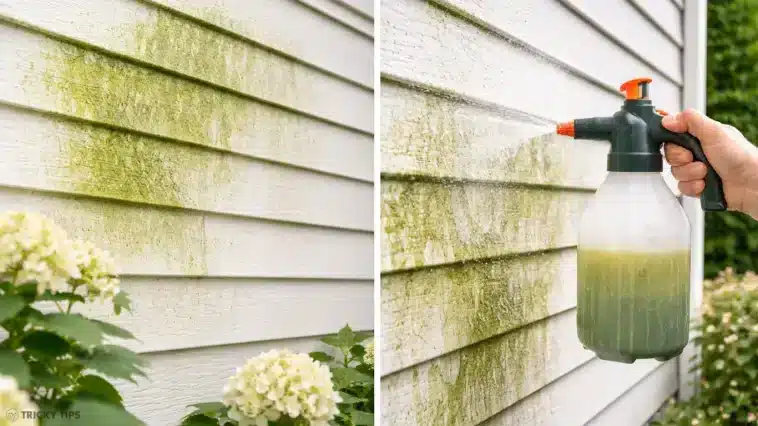
Green streaks on siding are common.
Especially on the side of the house that gets less sun.
The good news:
You usually don’t need a pressure washer.
You don’t need harsh chemicals.
You don’t need to scrub for hours.
You need the right method.
Let’s go step by step.
Why Green Algae Forms on Siding
Algae grows where moisture stays longer.
That usually means:
- North-facing walls
- Shaded areas
- Spots behind trees or bushes
- Areas near sprinklers
If the surface stays damp, algae spreads.
It’s not a sign your home is dirty.
It’s a moisture issue.
What You’ll Need
Keep this simple.
- 1 gallon of warm water
- 1 cup oxygen-based bleach
- 1 tablespoon liquid dish soap
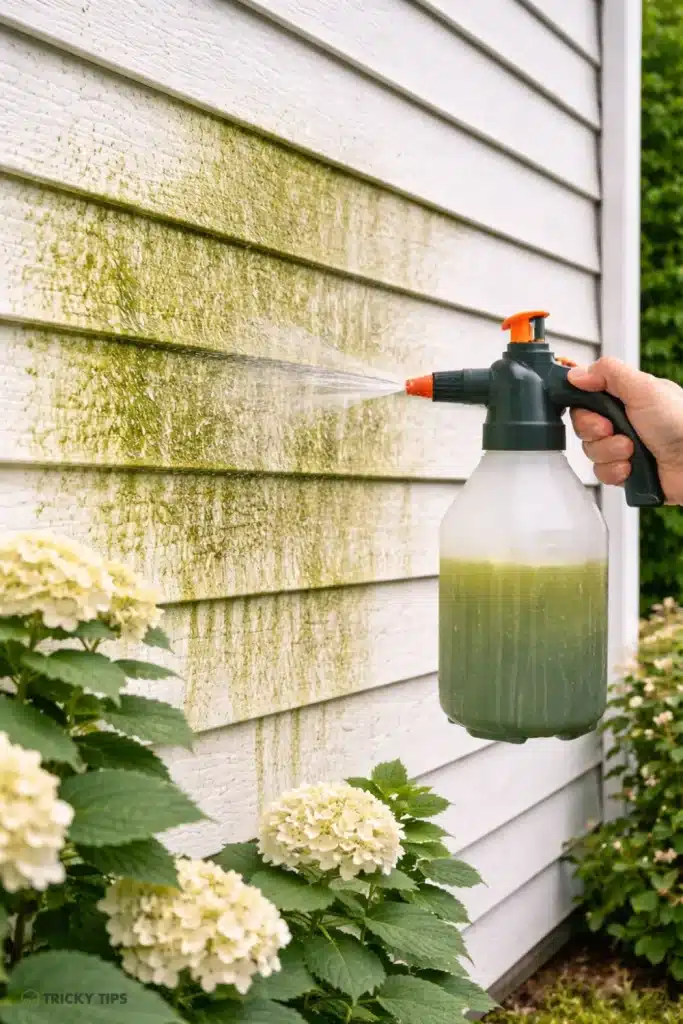
- Garden pump sprayer
- Hose
That’s it.
Avoid chlorine bleach if possible.
It’s stronger than needed and harder on plants.
Why This Mixture Works
Oxygen bleach breaks down organic growth.
Dish soap helps the solution cling to vertical surfaces instead of sliding off.
Warm water helps dissolve everything properly.
This combination loosens algae so it rinses away.
No heavy scrubbing required.
Step-by-Step Cleaning Process
Step 1: Pick the Right Time
Choose:
• A cloudy day
• Early morning
• Late afternoon
Avoid direct sun.
If the surface dries too fast, the solution won’t work as well.
Step 2: Lightly Rinse the Siding
Use a hose.
This removes loose dirt and prepares the surface.
Do not use high pressure.
Step 3: Apply From Bottom to Top
This matters.
Spray the solution starting at the bottom and move upward.
Why?
If you spray from the top first, streaks can form as the liquid runs down.
Work in sections about 4–6 feet wide.
Step 4: Let It Sit
Wait 15 to 20 minutes.
Do not let it dry completely.
If it starts drying, lightly mist with more solution.
Step 5: Rinse From Top to Bottom
Now reverse direction.
Rinse gently from top to bottom.
Most of the green staining should fade significantly after rinsing.
If a spot remains, repeat once.
The One Detail Most People Miss
Airflow.
If bushes sit directly against siding, moisture stays trapped.
Trim plants at least a few inches away from the wall.
This simple step helps prevent future growth.
Many people clean the surface but ignore the cause.
That’s why algae returns quickly.
Common Mistakes to Avoid
- Using a pressure washer too close to vinyl
- Mixing chlorine bleach too strong
- Cleaning in direct sunlight
- Skipping a small test patch
High pressure can force water behind siding.
That can create bigger problems later.
Slow and steady is safer.
How Often Should You Clean It?
For most homes:
Once a year is enough.
If your home is heavily shaded, check every 6 months.
A quick rinse with a hose every few weeks also helps.
When This Method May Not Be Right
Be cautious if you have:
- Wood siding
- Very old paint
- Cracked or loose panels
Test a small hidden area first.
If discoloration remains after two treatments, deeper staining may require professional help.
How to Keep Algae From Coming Back
Focus on moisture control.
- Trim back trees
- Improve drainage around foundation
- Adjust sprinklers
- Keep gutters clean
Algae needs damp surfaces.
Reduce moisture and you reduce the problem.
A Simple Maintenance Habit
Twice a year, walk around your home.
Look for:
- Faded patches
- Shaded damp areas
- Early green spots
Catching it early makes cleaning easier.
You don’t need special tools.
You need consistency.
Final Thoughts
Green algae looks worse than it is.
With the right mixture and timing, most siding cleans up quickly.
No heavy scrubbing.
No expensive equipment.
Simple steps.
Clear results.
And once you understand why it happens, preventing it becomes easier.